
HY-6014 Tire Bladder Release Agent

HY-6014 Tire Bladder Release Agent
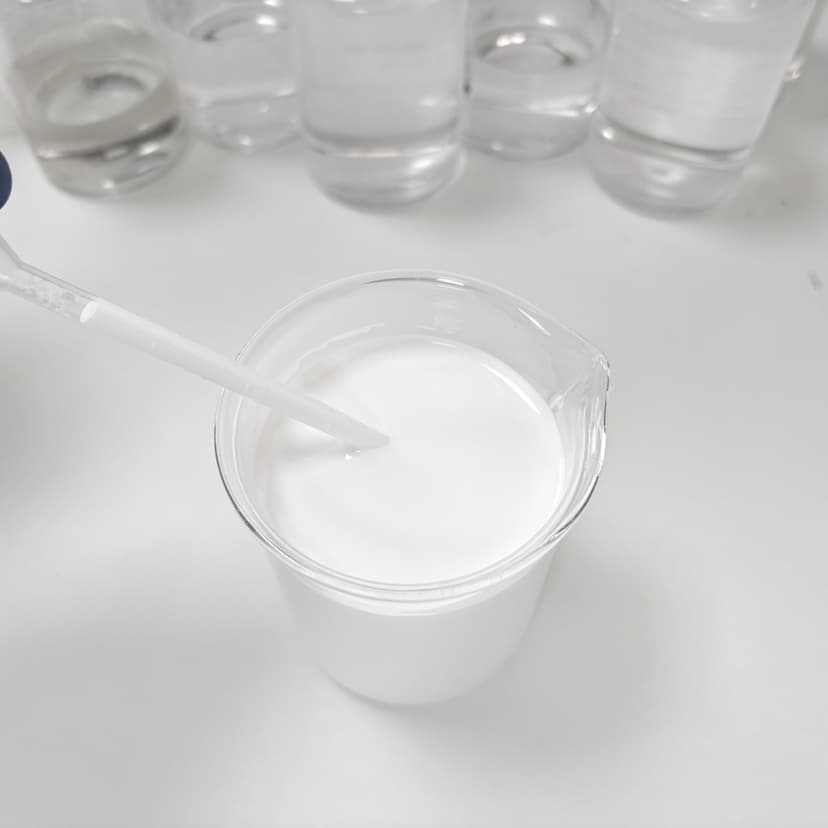
HY-6014 Tire Bladder Release Agent
HY-6014 is a macromolecular silicone material prepared by emulsion polymerization of high-purity octamethylcyclosiloxane with anionic surfactant. It is designed for tire production and helps tires release from molds in vulcanization processes.
Product Features
Water-dilutable tire bladder lubricating release agent with easy atomization.
Sprayed onto hot mold surfaces and provides release after curing.
Water-based, non-polluting and non-flammable, suitable for tire production.
Provides long-lasting release performance and is not prone to mold contamination.
Leaves no greasy feel on the tire surface after vulcanization and does not affect subsequent surface processing.
Can replace DOWSIL FBL-3289, WACKER E 22, DOWSIL HV 495, Elkem EMUL 8455 and similar grades.
Typical Properties
| Indicator | Result |
|---|---|
| Appearance | Milky white liquid, free of mechanical impurities |
| pH Value | 6.5-8.0 |
| Stability | No stratification after 20 minutes at 3000 r/min |
| Ionic Type | Anionic |
| Solid Content | 40%±2% |
How to Use
Stir the product evenly and place it in the spraying device. Spray uniformly on hot mold surfaces and use after water evaporates.
A 0.6mm-0.8mm nozzle is recommended for good atomization.
Recommended dosage: PCR tires can vulcanize about 10-20 tires per spray; TBR tires can be sprayed once per shift.
This product is an anionic system. Check compatibility when compounded with other materials, especially cationic systems, to prevent emulsion breaking.
Typical Applications
Packaging & Storage
Packaging Specifications
50kg, 100kg, 200kg drums
Storage Conditions
Store in a ventilated, cool and dry place. Avoid contact with strong acids and alkalis. Warehouse temperature should not be below 5°C to prevent freezing and emulsion breaking, and should not exceed 40°C. Transport and store as non-dangerous goods.